
Office Relocation Cabling in NYC
The new space cabled, tested and labelled before the furniture lands — and a cutover plan that has everyone working Monday morning. We plan backwards from move day.

Two addresses, one project
Office relocation cabling covers everything between the two leases — cabling the new space before you occupy it, moving the network over on a weekend, and leaving the old space in the condition your lease requires.
New Space Cabling
CAT6 or CAT6A to every desk, meeting room, printer, access point and camera position — pulled, terminated, certified and labelled before move-in.
MDF / IDF & Rack Build
The new comms room built out properly: rack, patch panels, cable management, power and a port map that matches the floor plan.
Carrier & Demarc Coordination
Extending the building's demarc to your suite, and being the number your ISP calls when their tech arrives and needs to find the room.
Meeting Rooms & AV
The rooms cabled and the displays mounted while the ceiling is still open. See conference room AV.
Move-Weekend Cutover
Old floor shut down, equipment relocated and racked, everything patched, powered and tested before anyone arrives Monday.
Old Space Decommission
Equipment recovered and abandoned cable removed to the standard your lease and the electrical code require. More on that below.
How far ahead should office move cabling start?
Start at the lease signature, not at the move date. The cabling itself is rarely the constraint — building access, landlord approvals and carrier circuit delivery are, and those are ordered in months, not days.
| When | What has to happen | Why it's there |
|---|---|---|
| Lease signed | Site walk of the new space. Order the internet circuit. | Circuit lead time is the longest item on the whole project. Everything else can be compressed; this can't. |
| 8–12 weeks out | Drop schedule against the furniture plan. Comms room located and agreed with the landlord. | Move the comms room later and every cable length changes. |
| 6–8 weeks out | Building rules, COIs, freight elevator and after-hours access booked. | NYC buildings book freight weeks ahead. This is the most common avoidable delay. |
| 3–5 weeks out | Cable pulled, terminated, certified and labelled. Rack built. | Ceilings are open and the floor is empty. It never gets easier than this. |
| 1–2 weeks out | Circuit tested live. Switches staged and configured. Cutover plan agreed in writing. | A circuit that fails testing here is recoverable. One that fails on move weekend is not. |
| Move weekend | Old floor down, equipment moved and racked, patched, powered, tested. | The work is done. This is execution, not discovery. |
| Monday, 7am | We're on site walking the floor while people arrive. | The problems that surface on the first morning are small and take minutes — if someone is there. |
| After | Old space decommissioned to lease and code requirements. | Landlord sign-off, and it's cheaper before the space is re-let. |
The thing that delays office moves is almost never the cable
It's the internet circuit. A provider already in your building can typically deliver in two to four weeks. A dedicated fiber circuit to a building the carrier isn't already in commonly runs 60 to 120 days or more.
The gap between those two numbers is the difference between a move that goes quietly and one where forty people work off phone hotspots for a month. And the difference is decided by a fact about the building that nobody checks until the order is placed: whether the carrier is already on-net there.
What actually pushes a circuit out
- Off-net buildings — the carrier has to build in, which can mean conduit, permits and street work.
- Right of entry — the landlord has to sign before the carrier's contractor may enter. This routinely sits on someone's desk for weeks.
- Site survey — often scheduled two to three weeks after the contract is signed, before any physical work starts.
- City permits — outside your control and outside the carrier's.
- Building capacity — the riser or building entrance may need upgrading for your circuit.
On the first site walk we tell you what's already in the building, so you order the right product in week one instead of discovering the problem in week nine. When the carrier's installer arrives we meet them, extend the demarc to your suite and terminate into your rack.
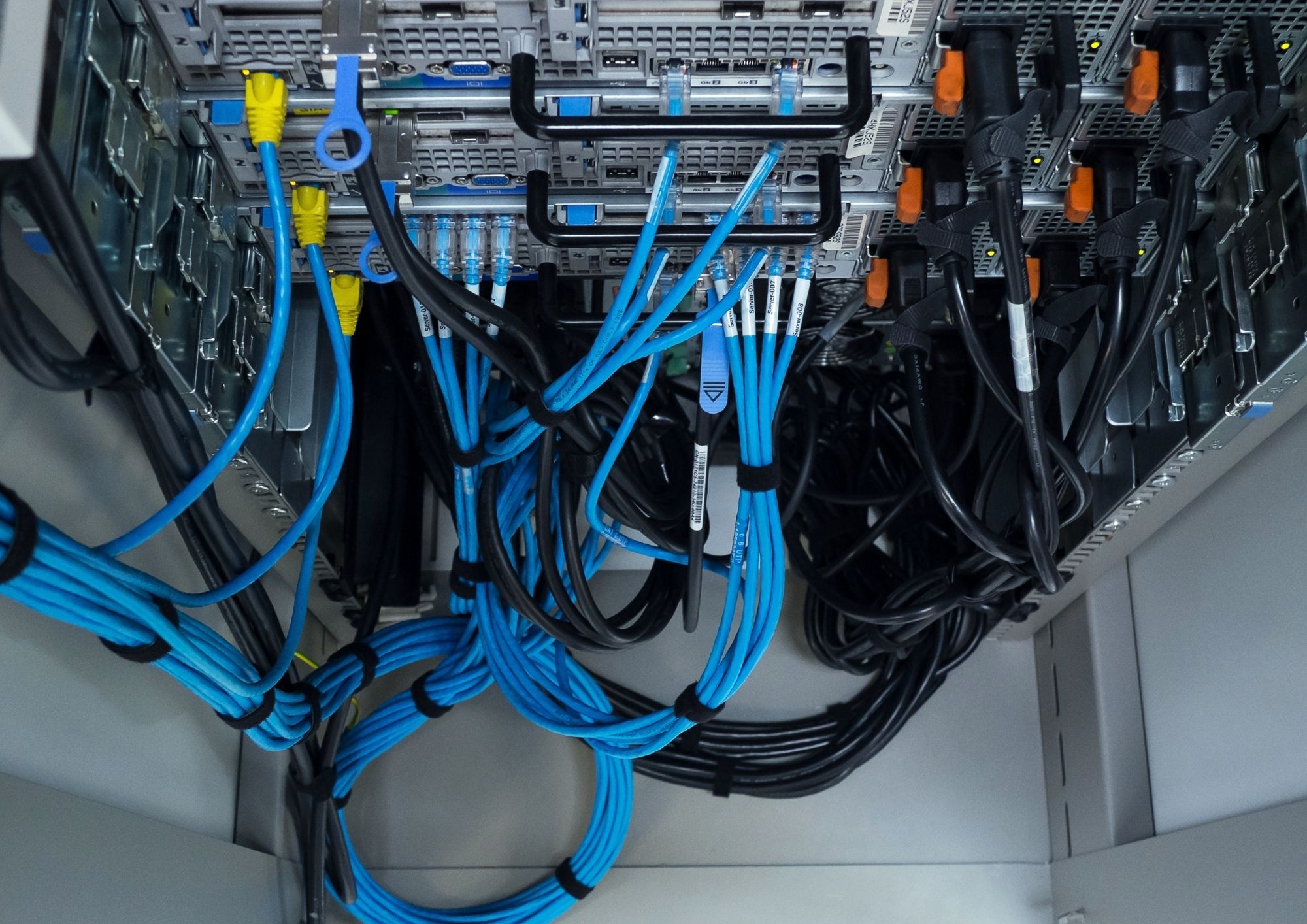

Cable it while the ceiling is still open
Every drop is cheaper, faster and neater before the space is occupied. Cabling an empty floor is a straightforward job; cabling the same floor around desks, people and a live business is a different price and a worse result.
We build the drop schedule against the furniture plan rather than the architectural drawing, because the two disagree more often than not — and the desk that ends up eight feet from where the drawing put it is the desk that gets a cable draped across a walkway.
Every link is certified with a Fluke-class analyser and handed over as a report: wiremap, length, insertion loss, NEXT and return loss. Ports are labelled to a documented scheme at both ends, and you get a port map that matches the floor plan. That documentation is what makes the next five years of moves, adds and changes cheap.
If your new space needs more than desks — meeting rooms, Wi-Fi coverage, a proper comms room — that's the same crew and the same schedule. See structured cabling.
Do you have to remove the old cabling when you leave?
Usually yes, and on two separate grounds. The National Electrical Code requires that the accessible portion of abandoned communications cable be removed — cable that no longer terminates at equipment and isn't tagged for future use. Most commercial leases also carry a restoration clause.
Why the code requires it
It's a fire-load rule. Decades of accumulated cable above a ceiling is combustible material and a source of smoke, so the code limits how much can be left behind. It applies to communications cable under Article 800 and to optical fiber under Article 770, with parallel language for Class 2 and 3 circuits.
"Accessible" is doing real work in that sentence: cable that can be reached without damaging the building's structure or finish. Cable inside a raceway or genuinely concealed by the structure is treated differently.
Why your lease requires it
Restoration clauses commonly oblige a tenant to return the premises broom-clean and free of tenant-installed cabling. Landlords enforce this at the point they're re-letting, which is exactly when you have no leverage and no crew on site.
Read the clause before you hand back the keys. If it's ambiguous, get the landlord's expectation in writing early — a decommission scoped in advance is a fraction of the cost of one performed under a deadline against a withheld deposit.
We decommission old space as a scoped job: equipment recovered and returned to you, cable removed, and photographs of the cleared ceiling for the landlord's file. Booked alongside the new-space work, it's another weekend rather than another project.
Friday night to Monday morning
By the time the weekend starts, everything that can be done in advance has been. The cutover is execution against a written plan, not problem-solving under pressure.
Old floor down
Equipment shut down in order, labelled and packed. Circuits and services documented before anything is unplugged.
Rack & patch
Equipment installed in the new rack, patched to the panels, powered and brought up against the port map.
Test the floor
Every port live-tested, Wi-Fi verified in the actual space, printers and meeting rooms checked. Snags fixed while the floor is empty.
On the floor
We're there as people arrive. Whatever surfaces in the first two hours gets handled in the first two hours.
Who calls us about moves
IT managers & directors
You own the outcome on Monday morning and you're coordinating a landlord, a GC, a mover and a carrier who don't talk to each other. You want one of them to be predictable.
Office & operations managers
The move is one of six things on your plate. You need someone who tells you what they need from you and when, without being chased.
Firms without internal IT
Twenty to eighty people, no IT department, an MSP who doesn't pull cable. We handle the physical layer and hand your MSP a documented network.
General & construction managers
Division 27 on a fit-out with a fixed occupancy date, and a tenant who will judge the whole project by whether the internet works on day one.
Office relocation cabling FAQ
How far in advance should we start cabling for an office move?
Talk to us at lease signature, even if the move is six months out. The cable pull itself typically needs three to five weeks of lead time, but the items that actually delay moves need far more: internet circuits can run 60 to 120 days or longer if the carrier isn't already in the building, freight elevator and after-hours access get booked weeks ahead in NYC buildings, and landlord approvals move at their own pace. An early site walk costs you nothing and tells you which of those clocks is already running.
How long does office relocation cabling take?
For an empty floor with open ceilings, a typical small-to-mid office is three to five weeks from start to certified handover, depending on drop count and how much building access you get per day. A single floor of 50 to 100 drops with reasonable access is usually one to two weeks of pulling and terminating plus certification. Occupied space, restricted after-hours-only access, or a building that allows one freight slot a day will all extend that — which is why the site walk happens before we quote a schedule.
Can you cable the new space while we're still working in the old one?
That's the normal sequence and it's the right one. The new space gets cabled, certified and labelled while it's empty — which is faster, cheaper and produces a neater result than cabling around furniture and people. Your business keeps running in the old space until the cutover weekend. By the time you move, the new floor has been tested and is waiting.
Who orders the internet circuit — you or us?
You do, because the contract and the account have to be in your name. What we do is tell you on the first site walk what's already present in the building, so you order the right product at the right time. If the carrier is already on-net you're likely looking at two to four weeks; if they have to build in, plan on 60 to 120 days and order immediately. We coordinate with the carrier's installer when they arrive, extend the demarc to your suite, and terminate into your rack.
Do we have to remove the cabling from our old office?
Usually, on two grounds. The National Electrical Code requires the accessible portion of abandoned communications cable — cable that no longer terminates at equipment and isn't tagged for future use — to be removed, as a fire-load measure. Separately, most commercial leases include a restoration clause obliging you to return the space free of tenant-installed cabling. Check the clause early: a decommission scoped in advance costs a fraction of one done under deadline while a landlord holds your deposit.
What actually happens on move weekend?
By Friday everything possible has already been done — the new floor is cabled, certified and labelled, the rack is built, the circuit is live and tested, and the cutover plan is agreed in writing. Friday evening the old floor comes down in a documented order. Saturday the equipment is racked, patched and powered in the new space. Sunday every port is live-tested, Wi-Fi is verified in the real environment, and meeting rooms and printers are checked. Monday at 7am we're on the floor as people arrive.
Can you move our server rack and network equipment?
Yes — shutdown in order, labelled, transported, re-racked, patched and brought back up against a documented port map. If you have an MSP or internal IT team, we work to their sequence and hand them a documented physical network to bring services up on, so nobody is guessing about what's plugged in where.
How much does office relocation cabling cost in NYC?
It's driven by drop count, the construction of the space, and what access the building allows. An open floor with accessible ceilings and daytime access is at one end; a landmarked building with plaster ceilings, one freight slot a day and after-hours-only work is at the other — for the same number of drops. Decommissioning the old space and any conference room AV are scoped separately so you can see what each is costing. We walk both spaces and put a written number against a written scope.
Can you provide certificates of insurance for both buildings?
Yes, and moves usually need two — the building you're leaving and the one you're entering, often with different certificate holders and requirements. We carry $2,000,000 general liability on a blanket additional insured basis with an agent on call, so certificates are typically issued within 24 hours for unlimited concurrent projects. Send us both buildings' requirements and we'll get them filed before either management office asks.
The rest of what we do

Structured & Network Cabling
CAT6 and CAT6A data drops, fiber backbone, MDF/IDF racks and Wi-Fi cabling — certified and documented before handover.

Conference Room & Boardroom AV
Displays, video conferencing and boardroom audio — cabled and commissioned while the new space is still open.

Low Voltage Contractor
Division 27 scope for fit-outs and buildouts — pathways, tray, rough-in and coordination with your GC and building.