Low Voltage Contractor in NYC
Division 27 communications scope for commercial fit-outs and buildouts — pathways, rough-in, structured cabling, backbone and AV. Non-union, $2M insured, COIs in 24 hours.
What does a low voltage contractor do?
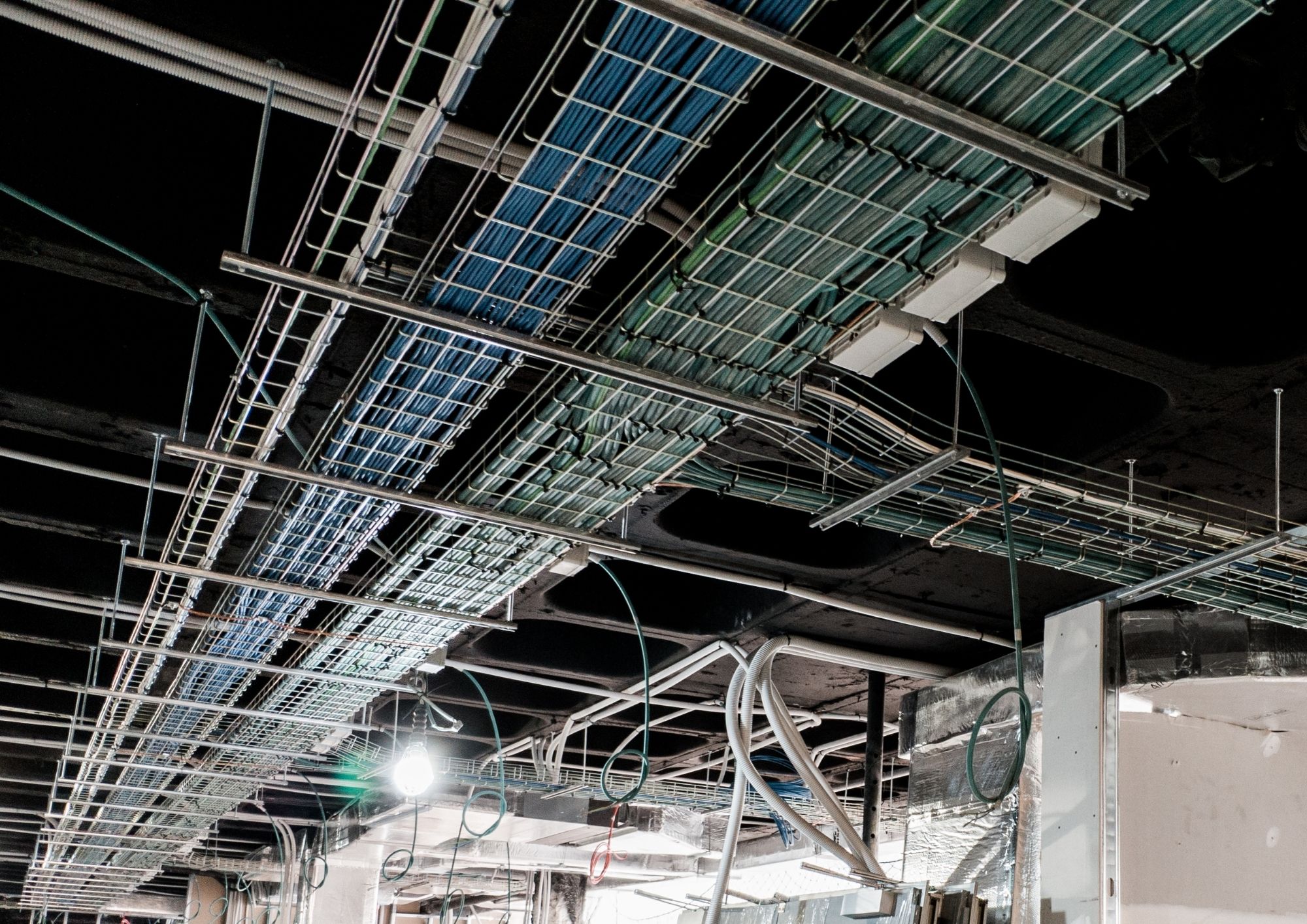
A low voltage contractor installs the building systems that run below line voltage — on a commercial fit-out that means the communications scope: pathways and cable tray, structured cabling, backbone, equipment rooms, and audio-video. In CSI MasterFormat it's Division 27.
"Low voltage" is a broad trade term covering everything from data cabling to alarms. On a real project it's specified far more precisely than that, which is why the useful conversation with a GC starts at the spec section rather than the trade name.
| Section | Title | What we do under it |
|---|---|---|
| 27 05 00 | Common Work Results for Communications | Pathways, cable tray, J-hooks, sleeves, firestopping, backboards, grounding and bonding. |
| 27 10 00 | Structured Cabling | The horizontal and backbone system as a whole — designed, installed, tested, documented. |
| 27 11 00 | Communications Equipment Room Fittings | MDF and IDF buildout: racks, cabinets, patch panels, vertical and horizontal management, power coordination. |
| 27 13 00 | Communications Backbone Cabling | Riser and floor-to-floor fiber and copper between equipment rooms. |
| 27 15 00 | Communications Horizontal Cabling | CAT6 and CAT6A to workstations, WAPs, cameras, printers and devices, within the 90-metre limit. |
| 27 20 00 | Data Communications | Data drops, patching, port mapping and network cabling infrastructure. |
| 27 30 00 | Voice Communications | Voice cabling, 66/110 blocks where legacy systems remain, VoIP infrastructure. |
| 27 40 00 | Audio-Video Communications | Conference room and boardroom AV, displays, distribution and digital signage. |
Section numbers and titles per CSI MasterFormat Division 27, Communications.
We self-perform our scope
Every drop, every pathway and every termination on our package is installed by our crew, tested by our crew and documented by our crew. Nothing on our scope gets handed to a sub you've never met.
Plenty of low voltage outfits bid wide and subcontract half of what they win. That's how a GC ends up managing a sub who is managing a sub, with a warranty split across companies that don't answer each other's calls. When something comes back in year two, everyone points at someone else.
We'd rather own the work. One crew, one warranty, one number to call — and a closeout package that proves what was installed and how it tested.
We also coordinate cleanly with the other trades on your job. Where another contractor's devices need conduit, sleeves, tray or a drop to land on, we run it as part of our pathway scope so their cable has somewhere to go. That coordination is routine and we're used to it.

What actually matters when you're picking a low voltage sub
Not the cable brand. Whether the sub shows up when the ceiling is open, produces the paperwork the building and the owner require, and doesn't become the reason the certificate of occupancy slips.
COIs before mobilisation
$2,000,000 general liability, blanket additional insured, agent on call. Certificates typically issued within 24 hours, for unlimited concurrent projects — send us the holder requirements and it's handled.
Non-union, open shop
Straightforward on private commercial fit-outs and buildouts, which is the bulk of what we do. Competitive pricing and a crew we can schedule around your sequence rather than someone else's.
We work your sequence
Rough-in before the ceiling closes, trim after the walls are painted. We show up in the window you give us, and if the window moves we re-plan instead of no-showing.
Submittals that don't bounce
Product data, cut sheets and shop drawings in the format the spec asks for, on the schedule the submittal log says — not three weeks after the RFI.
Closeout documentation
Test results for every link, as-built drawings, labelling schedule and port map, O&M data. The package the owner needs, delivered at closeout rather than chased for a month.
Off-hours when the building demands it
Occupied floors, landmarked buildings, one freight slot a day, after-hours-only access. Mon–Sat, 7am to 7pm, and weekends where the schedule needs them.

Send us the drawings and the spec
Give us the tech drawings, the Division 27 spec section and the schedule, and you'll get back a scoped number with the inclusions and exclusions written out — not a lump sum that turns into change orders.
What helps us bid accurately
- Tech and RCP drawings, plus the furniture plan if it exists
- Division 27 specification section
- Building rules — freight access, work hours, COI requirements
- Schedule, particularly the rough-in window
- Who owns the equipment procurement — you, us, or the owner
What you get back
- Line-item scope with explicit exclusions
- Drop count and cable category stated, not implied
- Manpower and duration against your schedule
- Anything in the drawings that won't build as drawn, flagged before award rather than as an RFI in week six
Who we work for
Most of our low voltage work comes through people who are managing a project, not buying cable.
General & construction managers
Division 27 on a fit-out with a hard occupancy date. You want a sub who bids the spec, hits the rough-in window and produces closeout without being chased.
Property & building managers
Base-building work, riser cabling, tenant fit-outs and the endless small jobs that keep a commercial building running.
Architects & designers
A second opinion on whether the communications rooms are in the right place before the drawings are frozen. That conversation costs nothing and saves a lot.
Owners & tenants direct
Where there's no GC and someone still has to own the physical layer, coordinate with the building and hand over documentation.
Low voltage contractor FAQ
What counts as low voltage work?
In construction terms, low voltage covers the building systems that operate below line voltage — data and voice cabling, wireless infrastructure, audio-video, and the pathways, tray and equipment rooms that carry them. On a specified project it's written up under CSI MasterFormat Division 27, Communications, broken into the sections listed above. "Low voltage" gets used loosely in the trade, so when you're comparing quotes, ask which spec sections each contractor is actually carrying — that's the only way two numbers are comparable.
Can you cable camera, access control and device locations?
Yes. Cabling and pathways to camera positions, door hardware, access control readers, wireless access points and any other device on the floor plan are part of our horizontal cabling scope — pulled, terminated where required, tested and labelled to the same standard as the data drops. Tell us what's going in and where, and we'll cable for it. If your project needs more than the cabling, call us and we'll tell you straight what we can cover.
Are you union or non-union?
Non-union, open shop — which is straightforward on the private commercial fit-outs and buildouts that make up the bulk of our work. It keeps our pricing competitive and lets us schedule around your sequence. Send us the project's labour requirements with the bid documents and we'll confirm how we fit before you award anything.
How fast can you get us a certificate of insurance?
Typically within 24 hours. We carry $2,000,000 general liability on a blanket additional insured basis with an agent on call, and there's no limit on concurrent projects. Send the certificate holder details and any building-specific requirements and we'll have it filed before mobilisation.
Will you bid from drawings, or do you need a site visit?
We'll bid from drawings and a spec section, and for most fit-outs that's enough to give you a firm number. We'll also walk the space, because drawings routinely disagree with what's above the ceiling — existing tray, unexpected structure, riser conditions — and catching that before award is cheaper than an RFI in week six. Either way you get inclusions and exclusions in writing, so there's no argument later about what was carried.
What documentation do we get at closeout?
Certification results for every installed link from a Fluke-class analyser — wiremap, length, insertion loss, NEXT and return loss — plus as-built drawings, the labelling schedule, a port map that matches the floor plan, and O&M data. Delivered as the closeout package rather than assembled after the owner asks for it.
Do you work outside Manhattan?
All five boroughs, plus Long Island and northern New Jersey. Most of our work is Manhattan and Brooklyn commercial, but the crew travels — the majority of our jobs are on someone else's site regardless of where our office is.
The rest of what we do

Structured & Network Cabling
CAT6 and CAT6A data drops, fiber backbone, MDF/IDF racks and Wi-Fi cabling — certified and documented before handover.

Conference Room & Boardroom AV
Section 27 40 00 scope — displays, video conferencing, boardroom audio, cabled and commissioned.

Office Relocation Cabling
New space cabled and certified before move-in, weekend cutover, old space decommissioned to lease and code.